
Europe Is Counting Your Days Now. It Counts Them Differently Than You Do.
The rubber stamp is gone
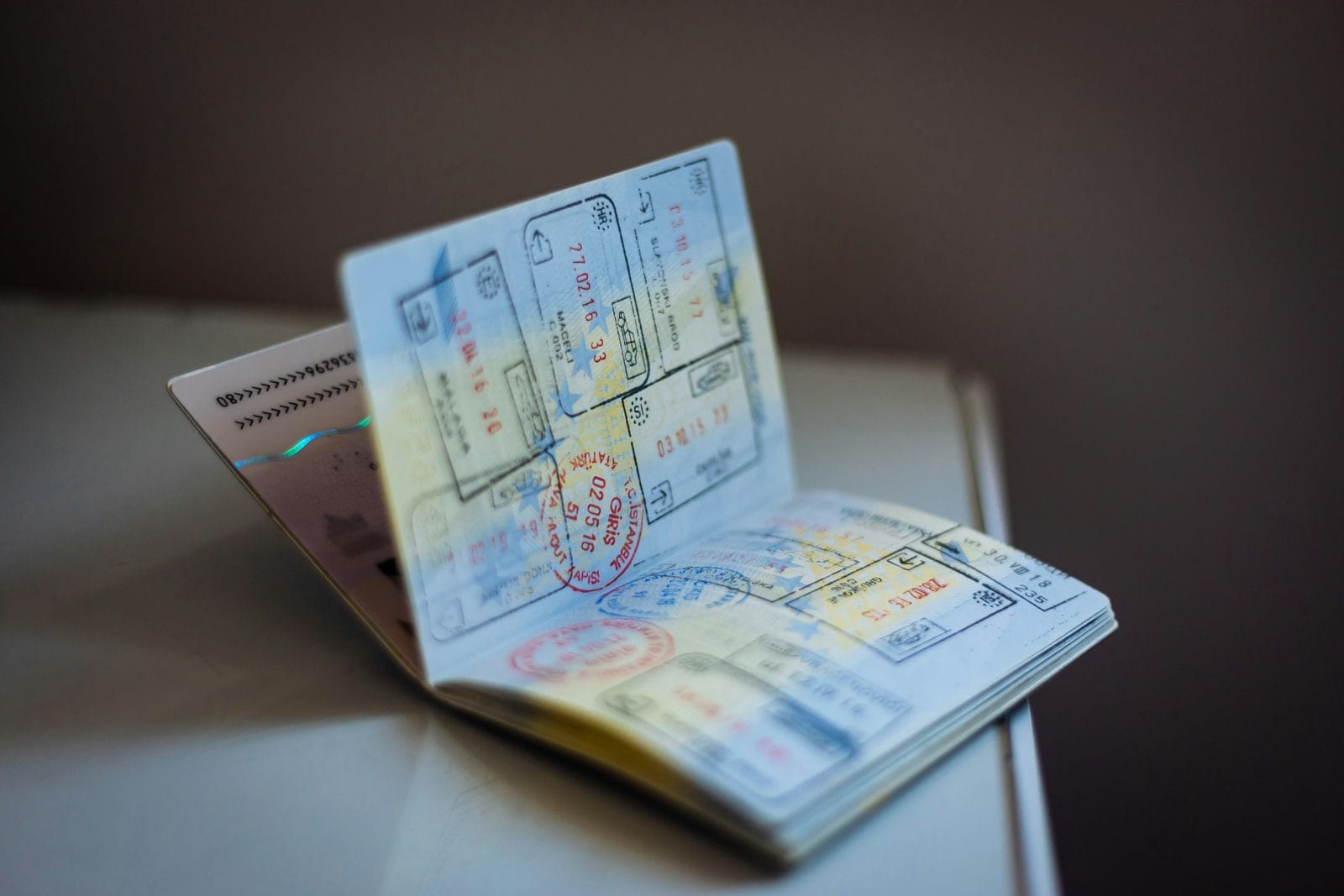
For years, the 90-day rule in Europe was enforced by a human being with a rubber stamp. Some of them were thorough. Some of them were tired. Some of them stamped the wrong page, or stamped so faintly you couldn’t read the date six weeks later, or waved you through without stamping at all.
That system ended on April 10th of this year.
The Entry/Exit System, EES, is now fully operational across every Schengen border. Your passport gets scanned, your face and fingerprints get recorded, and a computer starts keeping score. A database does the counting now. It does not get tired, it does not stamp the wrong page, and it does not forget you were in Portugal in February.
For anyone planning a long trip, the concern is that the computer counts your days differently from the way most of us count them in our heads. And the gap between those two methods is exactly big enough to turn a carefully planned three-month trip into an overstay.
Who this affects
Anyone planning an extended trip to Europe (six weeks, three months, a winter away) where you’ll be anywhere near the 90-day limit. If your trip is two weeks, none of this will ever touch you. If you’re planning to spend a real stretch of time over there, or you’re thinking about a couple of longer trips in the same year, this is worth twenty minutes of your attention.
It’s also for anyone who’s been travelling to Europe for decades and has a mental model of how this works built up over years of stamps. That model was accurate. It’s now out of date, and being experienced is not protection.
Why this matters
An overstay can be serious. Depending on the country and the length of the overstay, it can mean a fine, a re-entry ban recorded against your biometrics, or being turned around at the border on your NEXT trip. And unlike the old paper system, there is now no version of this where a sympathetic officer squints at a faded stamp and lets it go. The record is the record.
The rule itself hasn’t changed. What changed is how strictly it’s enforced. If you understand the maths, you’re fine. Most people don’t, because for twenty years they didn’t need to.
What the rule says
The legal text is Regulation (EU) 2016/399, the Schengen Borders Code. It’s a 2016 codification, and the actual 90/180-day definition inside it dates back to a 2013 amendment of the earlier code.
The shorthand says: 90 days out of every 180.
The regulation says something more precise, in two parts, and both parts are where people get caught.
First, the window moves. The European Commission’s own guidance puts it plainly: you must count back 180 days from each day of your stay, and the total number of days you were present in that window cannot exceed 90.
Read that again, because it’s the bit that trips people. There is no start date. There is no reset. The 180-day window is a rolling one that slides forward with you, one day at a time. Every single day you’re in Europe, the clock looks backward six months and asks: how many of those days were you here?
The mental model most people carry is a fresh tank of 90 days that empties and then refills. That’s not what this is. It’s more like a rolling six-month ledger that you’re always inside of.
Second, both ends count. Here’s the sentence from the Commission’s own calculator manual, and I’d encourage you to read it slowly:
“The date of entry shall be considered as the first day of stay on the territory of the Member States and the date of exit shall be considered as the last day of stay.”
Both the day you arrive and the day you leave count as full days of stay.
The three days you didn’t know you’d spent
This is where the theory becomes a real problem, so let’s do it with actual numbers.
Say you land in Lisbon on the 1st of the month and fly home on the 30th. How many days did you use?
Most people count nights. Twenty-nine nights, twenty-nine days. Some people count it as a month and call it thirty. The system counts thirty. The 1st and the 30th both count in full, regardless of whether you landed at 11pm or left at 6am.
One month, one extra day. Not a crisis.
Now stretch it. Three separate trips in a rolling 180-day window: a month in the autumn, three weeks at Christmas, five weeks in the spring. Each one gains you a day you didn’t budget for at the front, and each one you probably already counted the back end wrong too. Suddenly you’re three or four days over a limit you thought you were sitting comfortably inside.
And the second half of the trap is the rolling window. If your autumn trip is still inside the 180-day lookback when your spring trip starts, those autumn days are still on the ledger. They haven’t expired just because the calendar year turned over.
The 180 days do not care about January 1st.
What EES actually changed
EES hasn’t made the rule harsher. It has made the counting accurate, which only costs you if you were benefitting from the old inaccuracy.
Three things stopped working the day it went live:
- If an officer didn’t stamp you in or out, those days were effectively invisible under the old system. There’s no such thing as a missed biometric scan.
- A smudged date used to be an argument you could win at the border. It isn’t an argument anymore.
- Some travellers held two valid passports and alternated them, which broke the paper trail. EES registers the person, face and fingerprints, not the document. Two passports, one traveller, one ledger.
I’m not suggesting most people were deliberately gaming this. Many weren’t. But a lot of long-stay travellers had built up habits over the years that quietly depended on the system being imperfect, and those habits are now liabilities.
The queues, and the thing that’s been delayed
Two practical notes worth having before you book flights.
Border waits were bad through the summer of 2026. Reporting described queues of up to three hours at peak times, with some southern European hubs approaching five. The EU says only about twenty of its roughly 1,500 border crossing points are considered problem spots. If your entry airport is one of the busy ones, check recent reports on queue times before you book a tight connection.
ETIAS has slipped again. This is the travel authorization Canadians will eventually need to apply for before flying: the European equivalent of an eTA. The EU had said it would start in the last quarter of 2026. It has since dropped that date, and its official page now says only that ETIAS isn’t in operation, no applications are being taken, and the start date will be announced several months before launch. As of October 26, 2026, no date has been announced.
My read: don’t plan around any ETIAS date until the EU publishes one. When it does, you’ll have months of notice. And treat any website selling you an ETIAS application today with real suspicion. You can’t apply for something that doesn’t exist yet.
The mistakes people actually make
- Counting nights instead of days is the single most common error, and it costs you at least one day per trip.
- The 90 days don’t reset on a fixed date. There is no reset; the window slides forward continuously.
- Assuming January 1st clears the slate is wrong. The 180-day lookback ignores the calendar year entirely.
- A country-hop doesn’t pause the clock. Schengen is counted as one territory, so moving from France to Italy changes nothing.
- Non-Schengen countries don’t automatically fix the problem, and the list keeps getting shorter. Ireland and the UK still sit outside Schengen and don’t count toward your 90 days. Croatia used to be in that category, but it became a full Schengen member on January 1, 2023, so it counts like anywhere else now. Bulgaria and Romania are the same: they’ve counted since March 31, 2024, and became full members on January 1, 2025. Cyprus is the one to watch. It’s in the EU but not yet in Schengen, so days there don’t count today. Its government expects to join in 2027, and once it does, Cyprus will count too. Check each country’s status before you go rather than assume last year’s answer still holds.
- Your old stamps won’t help you reconstruct your history. If you’re near the limit, the database’s version is the one that counts, not your passport pages.
What to do instead
Use the European Commission’s own short-stay calculator. It’s free, it’s the same logic the border uses, and it has two modes: one to check a stay you’ve already taken, one to plan a stay you haven’t. It is not a commercial site trying to sell you anything, and it’s the only calculator I’d trust without verifying it against something else.
Then build in a buffer. If your plan lands you at 88 days, you have no margin. Delayed flights, a cancellation, a family emergency that keeps you an extra week. Any of these turn 88 into 92. I’d want at least a week of daylight between my itinerary and the limit, and more if the trip has any moving parts.
And if you’re planning to be away a long stretch (four months, a winter) the 90-day limit is the wrong tool entirely, and you should be looking at a national long-stay visa for a specific country rather than trying to engineer your way around a rule that wasn’t designed for what you want to do.
Try this
- Open the European Commission short-stay calculator and enter your last two European trips, using actual arrival and departure dates rather than what you remember. See whether the number matches your assumption.
- Count your next planned trip the system’s way: entry day plus every day in between plus exit day, then compare it to the number you had in your head.
- Write down every day you’ve spent in Schengen countries in the last six months, before you plan anything new.
- If two trips fall within any 180-day span, add them together and check the total against 90. Don’t check them separately.
- Before booking, look up which airport you’re entering through and whether it’s been reported as an EES pinch point this season.
One optional next step
Take the trip you’re currently thinking about, even if it’s just an idea on the back of an envelope, and count it properly. Entry day, every day in the middle, exit day. Then look back six months from your planned arrival and add anything else you’ve spent over there.
If the number comes out above 83 or so, you don’t have a trip yet. You have a trip that needs restructuring, and it’s far better to find that out now, at your kitchen table, than at a border desk in Lisbon with your luggage on the belt behind you.
Sources: Regulation (EU) 2016/399, Schengen Borders Code · European Commission Short-Stay Calculator · Short-Stay Calculator user manual · European Commission, ETIAS · Forbes, EES queues and ETIAS delay, 30 July 2026 · Council of the EU, Croatia’s Schengen accession, December 2022 · Council of the EU, Bulgaria and Romania, December 2024. Last verified 26 October 2026. Entry rules change, so confirm current requirements before you book.
Enjoying this? Get more like it.
Join the list for practical trip planning and retirement-lifestyle ideas, straight from Rob.