Your Sense of Purpose Doesn’t Retire When You Do
The worry nobody says out loud
There’s an element of fear a lot of us carry into retirement, but we don’t like to talk about it.
Work gave us an identity and a reason to get up in the morning. It gave us interaction with other people every day, and those interactions had purpose and meaning. When that goes away, people can often feel like they’ve lost their sense of purpose.
And for years, the research seemed to agree. Earlier studies linked retirement with a reduced sense of purpose. A 2002 review that combined several of them, covering about 2,800 people, found the same thing.
Now here’s the catch. Those studies could only show that the two things went together. They couldn’t show which came first. People in poor health, or already losing interest in their work, are more likely to retire, and that can skew the results.
In 2021, three researchers published a study in Psychological Science that addressed that problem. They followed 8,113 Americans and used the ages when U.S. Social Security benefits kick in, which prompt a lot of people to retire at about the same time, to separate cause from coincidence.
The result: for the people whose retirement timing was set by those benefit ages, retiring INCREASED their sense of purpose, on average. Those increases appeared to come mainly from people with lower incomes who were leaving jobs they didn’t like.
What that does and doesn’t mean
It’s an American study, so on its own it isn’t proof of how things go in Canada. But a Canadian study points the same way. In a 2024 survey of 748 retired Canadians, published in the Canadian Journal on Aging, finances and how to fill their time were the most common worries going in. Yet most said their fears didn’t come true, or only partly did. Planning your money made people feel more prepared. But the people who were more satisfied were the ones who had also planned how they’d spend their time in retirement.
Back to the American study. The rise was clearest in the first four years after retiring. After that, the study couldn’t determine it either way. And it’s an average for one group of people. It doesn’t promise that everyone feels more purposeful the day after their retirement party.
But it does mean that losing your sense of purpose isn’t the default. For many people, the time you get back is the opportunity to do something else. So let’s look at what people actually do with that time, with some Canadian numbers and local examples.
(If you’re still at the stage of deciding how and when to leave work, I covered that, including the CPP rule many people have backwards, in easing out of work in Canada.)
Who this is for
Anyone recently retired, anyone about to be, and anyone who’s looking at a calendar that’s mostly blank and wondering what to do.
Volunteer, but start small
Volunteering shows up again and again in the research on retirees.
In 2023, Statistics Canada found that fully retired volunteers gave an average of 173 hours a year. Semi-retired Canadians were the most likely of all to volunteer, at 38%. And 72% of fully retired people who volunteered reported high life satisfaction, compared with 57% of those who didn’t.
Now, that doesn’t prove volunteering CAUSES the satisfaction. Happier, healthier people may simply be more likely to sign up. But it fits the purpose research: a role where people count on you.
What I find most useful in that data is the barriers. The top reasons fully retired Canadians gave for not volunteering were health, feeling they’d already given enough, and not being able to commit long term. I’d add one more that I suspect holds a lot of people back, although the survey didn’t ask about it: the fear of doing something different and putting yourself out there.
That last one is fixable. Start with something short, seasonal or one-off:
- Driving for a Meals on Wheels program one morning a week.
- A shift at the hospital information desk.
- Helping at a seasonal festival or an annual run.
- Joining a Men’s Shed. They’re community workshops where (mostly retired) men fix things, build things and drink a LOT of coffee together. Canada’s first one opened in Winnipeg in 2011, and by 2019 there were dozens across the country.
I’m involved with CASARA, the Civil Air Search and Rescue Association, which runs on volunteers. I’ve found it really interesting. I’ve learned new skills, and they’re important skills that people count on, so it feels good. It’s a change for me, because I’d never done anything like this before in my life, and I’m enjoying it quite a lot.
Your local volunteer centre is the easiest place to start, and Volunteer BC lists them across the province. Here’s a reason to say yes, too. Formal volunteering in Canada dropped from 41% of people in 2018 to 32% in 2023, so a lot of organizations are short of help right now.
Go back to school (no exams, no grades)
Learning is the one that surprises people most.
A Canadian study of 416 adults over 60 taking general-interest courses found that the longer people kept taking courses, the higher their psychological well-being. That held even for people who were otherwise considered vulnerable. Again, an association. But staying with it seemed to matter more than the subject.
You don’t need to enrol in a degree. Here in Chilliwack, ElderCollege runs non-credit courses for adults 50 and over in partnership with the University of the Fraser Valley. A membership is $20 per calendar year (it renews every January 1). The fall 2026 lineup listed about 37 planned courses, including Watercolours, Computer for Beginners, Introduction to Tai Chi, Introduction to Woodcarving and a course on Chilliwack’s recorded history.
In Vancouver and online, Simon Fraser University has run its Liberal Arts and 55+ program since the 1970s, with a tuition discount for 55 and over. And the Government of B.C. notes that some public colleges and universities offer reduced or free tuition to seniors, so it’s worth asking the one nearest you.
When I retired, I took some courses through Seneca College. They weren’t free, but I qualified for a certain amount of course credit because of my age (or being retired, I’m not exactly sure which!). I’ve used part of it, and I still have some left. I spent it on some super interesting courses on mapping systems. On my own, I also trained to become a drone pilot. That was fascinating, and it’s something I can use with search and rescue too.
Play counts too
Not everything has to be productive. Some of it should just be fun, especially if it gets you out of the house and around other people.
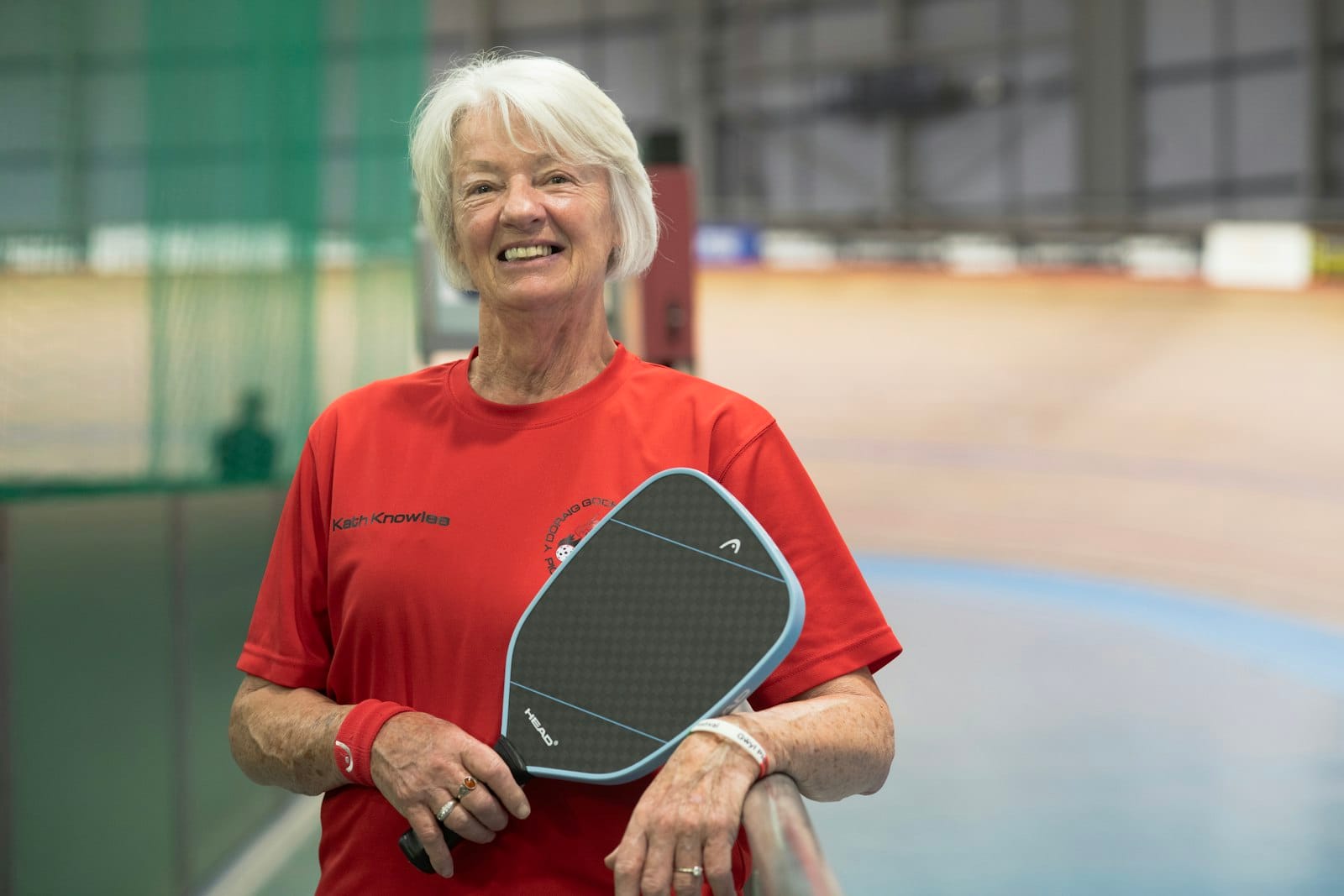
Pickleball is the obvious example. Pickleball Canada’s 2026 survey estimated about 1.8 million Canadians are playing, including about 306,000 in B.C. Its 2022 survey noted the sport’s popularity with older adults, who typically play during the week while everyone else is at work. And the reason players gave most often was simply fun.
It doesn’t have to be pickleball. A curling league, a choir, a walking group, a bridge club. What matters is that it’s regular, and other people expect to see you there.
I wrote more about building a good week in retirement around a few regular commitments like these.
Make travel part of the rhythm, not an escape
Now, you knew I’d get to travel.
For a lot of us, travel is near the top of the retirement list, and it should be. But the way most of us travel while we’re working doesn’t necessarily match how we can travel once we’re retired.
When Statistics Canada looked at overseas trips by Canadians at the end of 2025, the average overseas visit lasted 13.4 nights. That’s about two weeks, the classic working holiday: squeeze it all in, fly home, go back to work.
In retirement you’re not bound by that. You can go for longer, and hopefully you have a little more to spend on the things you really want to do. You can stay six weeks in one place, or move around every few days. You can go in the shoulder season when it’s cheaper and quieter. The point is, you can do something completely different from a typical ten-day all-inclusive resort, and actually enjoy the trip.
My wife and I have been planning our own independent trips for about 30 years, and now we can change things up more as we wish. Here’s what works best for us as part of a retirement year:
- Stay a little longer in each place. For us, three to five nights works better than two or three. Moving around has suited us in the past because of what we like to see and do, and I like to see a lot and do a lot, so sometimes we still have busy trips. Other times we find a place we like and stay for several weeks or a month, possibly longer, and do excursions from there. That gives us a chance to settle in, explore the local community and meet other people. What’s changed is that we want more experiences and memories than a list of places we’ve ticked off, so tours and guides matter more to us now. I wrote more about this in why I stopped trying to see everything.
- Build the trip around what you really want and feel comfortable doing, not a bucket list of places to check off. Long trips can be a lot more tiring at 60 than they were at 40.
- Come home to something. Travel works best combined with your other regular activities, like a class or a volunteer role. How long you go is up to you, short or long, but variety is good. And don’t forget you can take several trips a year. It doesn’t have to be one and done.
- Check the rules that change with longer stays: your provincial health coverage, travel insurance, and things like Europe’s 90-day limit.
And here’s the part people don’t expect. Planning a long trip properly is a project in itself. Researching neighbourhoods, comparing routes and building a realistic budget uses a lot of the same skills work did. For some people, that’s half the fun. For others it’s painful, and they dread it. And even when you do enjoy that kind of thing, it can get very tedious… trust me.
If it’s weighing on you
Most people adjust well to retirement, but not everyone, and there’s no prize for toughing it out. Your family doctor is a good first call. In B.C., the Canadian Mental Health Association’s free BounceBack program has online and video versions you can start without a referral. A registered clinical counsellor can help you talk it through. If you’re still working, your Employee and Family Assistance Program may include counselling, so use it before your last day. And bc211 (dial or text 211) can point you to local programs. I keep these on the Resources page too.
My own two cents
Talk through your retirement plans with your partner, and with the friends and family closest to you. If you’ve already retired, hopefully you’ve settled in. But maybe you haven’t, and that’s okay. Some of the ideas in this post might be worth a try.
I’ve found that keeping myself mentally occupied is a huge part of staying enthused about retirement. For me, it’s a chance to do all the things I’ve never done before and push my boundaries a bit.
The mistakes people actually make
- They assume purpose has to come from a job, and wait for it to come back on its own.
- They wait for the perfect volunteer role, when a short, seasonal one would have got them started.
- They sign up for a class once, instead of sticking with something long enough for it to matter.
- They plan travel as an escape from an empty calendar, instead of as a chapter in a full year.
I’ll admit I’ve tried a number of things since I retired that didn’t stick. I’m still finding my way too. But that’s actually a good thing. Keep trying, and eventually you’ll find something that has real purpose for you.
Try this
- Call your local volunteer centre and ask what’s short-term or seasonal.
- Look up your nearest ElderCollege or continuing studies program and pick one course for next term.
- Pick one regular activity with other people (a league, a choir, a walking group) and commit to it for a season.
- If travel is on the list, sketch next year with the trip as one chapter, and decide what you’re coming home to.
One optional next step
Open your calendar to a normal week next month. Put in three things that repeat every week and involve other people. Just three.
If you can’t fill three slots yet, that’s your project for the next month. And if you can, you’ve already got more purpose built in than you might think!
Sources: Yemiscigil, Powdthavee and Whillans 2021, The effects of retirement on sense of purpose in life (Psychological Science, accepted manuscript) · Ayse Yemiscigil, summary of the study (Psychology Today, December 2021) · Hutchinson and Ausman 2024, Not just one long vacation: lifestyle planning in the transition to retirement (Canadian Journal on Aging) · Statistics Canada, Formal volunteering by retired Canadians, 2023 (April 2026) · Statistics Canada, Volunteering and charitable giving, 2018 to 2023 · CBC News, Men’s Sheds in Manitoba (2019) · Volunteer BC, volunteer centre network · Narushima, Liu and Diestelkamp, lifelong learning and well-being (Ageing and Society) · Chilliwack ElderCollege · SFU Liberal Arts and 55+ · Government of B.C., Education and lifelong learning for seniors · Pickleball Canada, 2026 survey · Pickleball Canada, 2022 survey · Statistics Canada, National Travel Survey, fourth quarter 2025 · BounceBack BC · bc211. Last verified October 28, 2026. Program details and prices change, so check with the organization before you sign up.
Enjoying this? Get more like it.
Join the list for practical trip planning and retirement-lifestyle ideas, straight from Rob.